
The Producer Price Index will be better able to measure the average change over time in the sale prices of domestic goods and services, the Reserve Bank Governor said.

Jiomart B2B is the latest among organised supply-chain companies to bite the bullet, shutting down its warehouses, and asking its employees to leave. Why are companies finding it difficult to sustain the supply-chain business? Experts point out that gross margins in supplying fast-moving consumer goods (FMCGs) are very low.

Inflation in food articles during June stood at 2.04 per cent, as against 1.13 per cent in May.

A Reuters poll forecast the wholesale price index , India's main inflation measure, rose an annual 7.6 per cent in November, up from 7.45 per cent in October.

Retail inflation measured by the consumer price index has risen sharply across food and non-food constituents, including services, keeping inflation expectations high, the Reserve Bank of India said in its Second Quarter Review of Monetary Policy 2013-14.

To cut interest rates, the central bank head has to open up a debate on inflation target revision.

Clouding the inflation outlook is the recommendation of the 7th pay panel for an average 24 per cent pay hike for millions of its employees, which would lift demand-driven price pressures.

After a delayed start, the monsoon is advancing steadily.

The Wholesale Price Index-based inflation was (-)4.54% in Sep.

KV Kamath has had a tough journey so far.

Nifty PSU Bank index gained 1% led by Allahabad Bank, Andhra Bank, Syndicate Bank and IDBI Bank
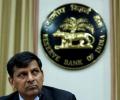
Here is some background on the candidates seen as potential successors to Rajan at the RBI

Pulses cropping has jumped to 39.4 per cent above 2015 levels.
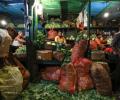
However, some analysts say RBI Governor Raghuram Rajan may delay the rate cuts amid mounting concerns over the government's fiscal health.

RBI targets to keep inflation at 4 per cent, (+/- 2 per cent), and its rise beyond this comfort zone will put pressure on the central bank to hike rates.

In August, wholesale prices rose 3.74 per cent year-on-year.

'The robust tax collections give the finance minister a fair amount of headroom for an expansionary fiscal policy.'
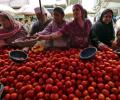
The rapid deceleration in prices has ignited a debate in New Delhi whether Asia's third-largest economy is heading towards deflation.

The change from wholesale to retail inflation as an anchor means that the weightage of diesel in inflation has decreased

In the current fiscal so far, retail inflation stabilised around 5 per cent, while wholesale price-based inflation averaged around 2.9 per cent during April-December.

Industrial production was seen growing 1.8 per cent from a year earlier in July, slower than June's 3.4 per cent increase, according to the median consensus in a poll of 31 economists.

Ajit Balakrishnan offers a thinking man's guide to e-commerce controversies.

Rajan has been facing continuous attacks by Bharatiya Janata Party MP Subramanian Swamy and some other sections, who have alleged that he has failed to lower interest rates and boost the economy

Retail inflation remained above the RBI's comfort level for the second consecutive month despite slipping slightly to 6.26 per cent in June while the factory output recorded a growth of 29.3 per cent in May, mainly on account of the base effect, the government data showed. The marginal slippage in the Consumer Price Index (CPI)-based inflation was noticed despite little firmness witnessed in the food inflation which inched up to 5.15 per cent in June from 5.01 per cent a month ago. Retail inflation based on Consumer Price Index (CPI) was 6.3 per cent in May 2021 and 6.23 per cent in June 2020.
Economic think-tank, Institute of Economic Growth said on Wednesday it expected widely tracked wholesale prices-based inflation to hover above 6 per cent for the present quarter.

The consumer price index has been in double digits for much of the past year, and was 9.8 per cent in September.
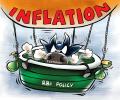
With pricing power of producers unlikely to strengthen and commodities ex-crude oil likely to remain sluggish in the immediate term, the core-WPI inflation may remain sub-zero in the rest of this calendar year.

'Commerce Minister Piyush Goyal once told me that if onion prices rise we will face the flak for it across India.' 'What can farmers expect from a government which talks like a trader and only believes in (electoral) profit and loss?'

He said the short term macroeconomic priorities of the RBI continue to focus on bringing down inflation towards the government-set target of 4 per cent

The government is somehow convinced that selective low-rate lending will stimulate demand and accelerate economic growth that plunged to a four-year low of 4.4 per cent in the first three months of 2013-14.

RBI takes steps to control inflation but the masses are not convinced.

A Kotak research report expects RBI to cuts rates by 50 basis points in the first half of 2019. RBI will announce its sixth bi-monthly monetary policy on February 7.

Next time you swipe, ask yourself, do you really need it or do you just want it?

As India looks to mend its Covid-battered economy, one thing that will grab the attention of all concerned is the path that both wholesale and retail inflation will follow. Even the Reserve Bank of India in its latest policy statement said, "Going forward, the inflation trajectory is likely to be shaped by uncertainties impinging on the upside and the downside.

Consumer prices were forecast to have risen 10.00 per cent annually last month, barely changed from the 10.09 per cent clocked in October.
The surge in inflation is a major cause of concern even for giants like the United States and China and rich nations like Britain and Singapore.

V Vaidyanathan, former executive director at ICICI Bank who turned entrepreneur to run Capital First, an NBFC that caters to smaller businesses, tells Pavan Lall in an exclusive interview that his new entity post the merger of Capital First and IDFC Bank which will be called IDFC First will launch by January and cater to a new India with value services.

Investors' confidence has been revived in recent weeks on the likelihood the elections will usher in a new government.
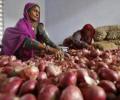
In case of onions, inflation skyrocketed to 127.04 per cent, while for the eggs, meat and fish segment the rate of price rise was 5.76 per cent.

American brokerage BofA Securities on Friday said the Indian economy continues to be "weak", pointing to activity indicators tracked by it. On the positive side, the brokerage said credit demand is bottoming out and the real lending rates adjusted for wholesale price inflation are falling. It can be noted that there has been a slew of reports lately about a stronger recovery being underway after the jolt caused by the pandemic.
